Nils Flores · 19 September 2026
Tracing the Migration Patterns of Merino Sheep and Their Impact on Wool Texture Variations Across Continents
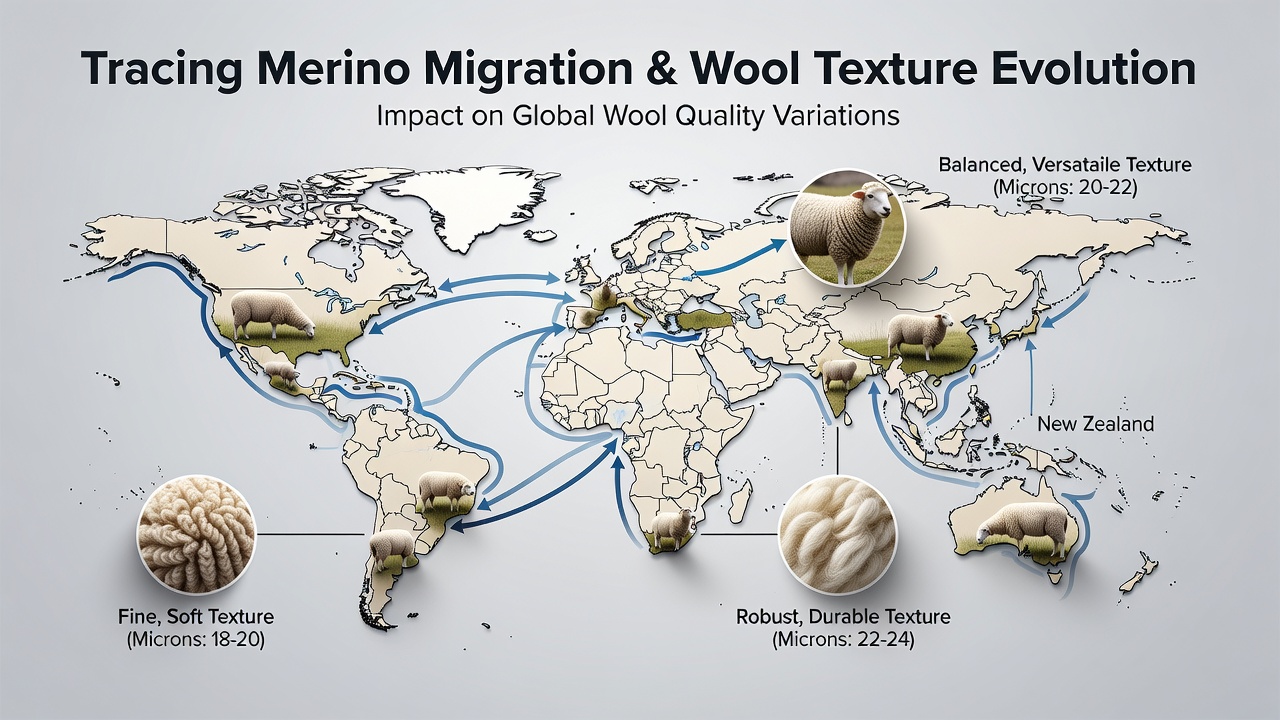
Merino sheep originated in Spain where selective breeding programs over several centuries produced wool with fiber diameters typically ranging from 18 to 24 microns, and historical records show that exports of breeding stock began in the late 1700s when royal flocks were distributed to other European courts and later to colonial outposts across multiple continents.
Early European Movements and Initial Exports
Spanish authorities maintained strict controls on Merino breeding stock until the early 1800s, after which animals reached France, Germany, and Britain through diplomatic gifts and commercial sales, while these transfers introduced genetic lines that later adapted to different climates and management systems in their new locations.
Researchers documented how wool from these early relocated flocks showed measurable changes in staple length and crimp frequency within two generations, and data from European agricultural archives indicate that micron counts often increased slightly when sheep moved from the dry plateaus of central Spain to the wetter pastures of northern Europe.
Arrival and Expansion in Australia
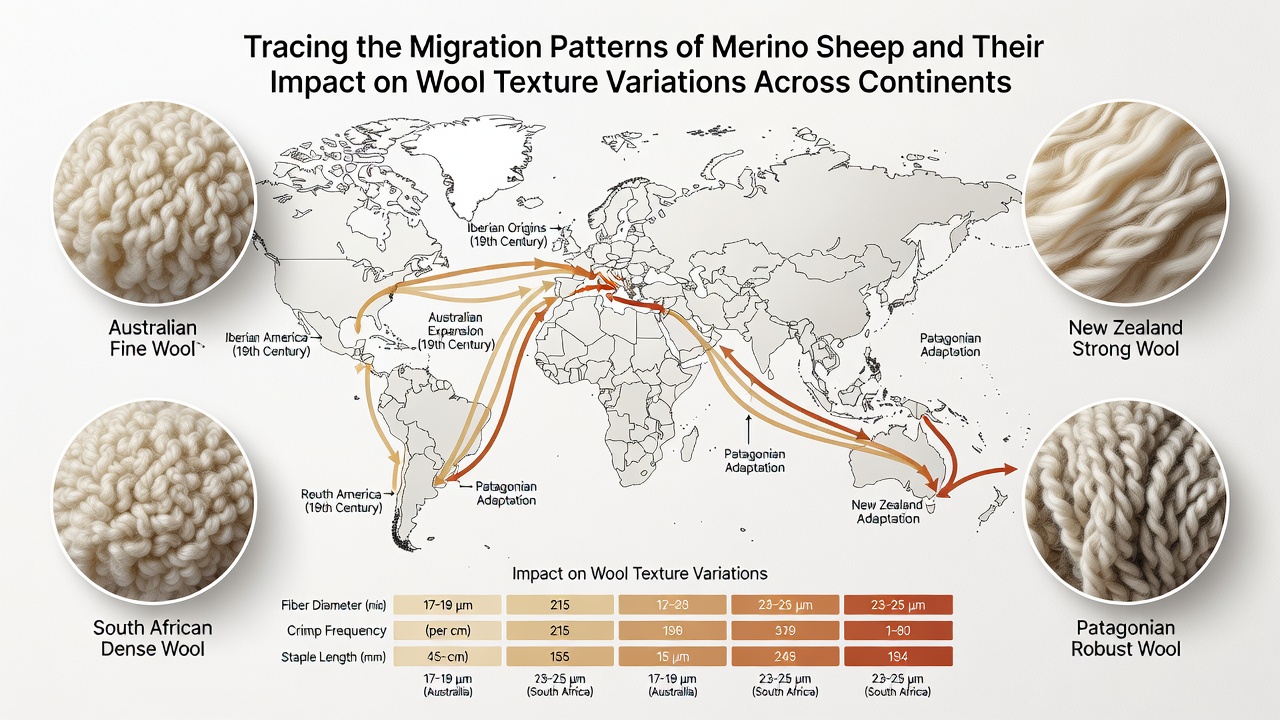
Merino sheep reached Australia in 1797 when several animals arrived from the Cape of Good Hope, and by 1830 colonial breeders had established large-scale operations that focused on finer wool production suited to the country's extensive grazing lands. Australian flocks grew rapidly through the 19th century, and by the 1900s the national sheep population exceeded 100 million head according to government agricultural censuses.
Climate and selective breeding combined to produce wool averaging 15 to 19 microns in many Australian regions, and ongoing genetic improvement programs tracked by organizations such as CSIRO continue to refine these characteristics. Observers note that September 2026 marks the release of updated national flock performance data that will compare current micron distributions against historical benchmarks from the 1990s.
Transfers to South Africa and New Zealand
Merino sheep arrived in South Africa during the same period of colonial expansion, and the Karoo region became a major production area where wool developed a slightly coarser character averaging 20 to 23 microns due to harsher environmental conditions and different nutritional profiles. South African breeders maintained separate bloodlines that emphasized hardiness alongside fiber quality, and export records show consistent shipments to European mills throughout the 20th century.
New Zealand received Merino genetics primarily from Australian sources in the mid-1800s, and high-country stations in the South Island developed flocks whose wool often measured 18 to 21 microns. Studies from agricultural research stations there have recorded how altitude and seasonal temperature swings influence fiber diameter variation within individual animals.
Introduction to the Americas and Asia
Merino sheep reached North America in the early 1800s through imports to the eastern United States, and later movements carried animals to the western states where large range operations developed. USDA agricultural reports indicate that American Merino wool typically falls between 20 and 24 microns, reflecting both the original Spanish genetics and subsequent crossbreeding with other breeds for meat production.
South American countries including Argentina and Uruguay established significant Merino populations by the late 19th century, and wool from these regions generally measures 19 to 22 microns according to international testing laboratories. Limited introductions also occurred in parts of Asia during the 20th century, though production volumes remained smaller compared with southern hemisphere centers.
Documented Wool Texture Variations by Region
Comparative analyses of wool samples collected across continents reveal consistent patterns linked to both genetic heritage and environmental factors, while fiber diameter, crimp, and staple strength differ measurably between source regions. Australian wool tends toward finer grades that command premium prices in apparel markets, whereas South African and American clips often supply mid-range specifications used in both clothing and interior textiles.
International wool testing standards applied by laboratories in multiple countries allow direct comparison of these characteristics, and historical shipment records demonstrate how buyers adjusted specifications based on the continent of origin. Breeding programs in each major producing area have continued to select for specific fiber traits that align with local conditions and market demands.
Conclusion
Merino sheep migrations spanning more than two centuries have distributed distinct genetic populations across continents, and the resulting wool texture variations reflect interactions between original Spanish stock, local climates, and ongoing selection practices. Current monitoring efforts, including those scheduled for release in September 2026, provide updated measurements that track how these patterns continue to evolve under modern management systems.